
University of Primorska
Faculty of Mathematics, Natural Sciences and Information Technologies
- Študij
- Mednarodno sodelovanje
- Raziskovanje
- O fakulteti
Presentation of the study
The professional higher education study programme Agronomy is conducted in the Slovenian language.
The study programme offers a broad range of knowledge that enables understanding of the interactions between organisms and ecological factors in an agroecosystem, the cultivation of resilient plants supported by genetics and modern biotechnology, the management of plant diseases and pests, and an understanding of consumer needs. Fundamental natural science knowledge is complemented by content in plant production (biotechnics), with particular emphasis on genetics, plant breeding, and biotechnology, which enable the improvement of agricultural crop characteristics. Core subjects in agroecology, plant protection, land use, and nature conservation are further enhanced with animal science and forest management, allowing for a comprehensive approach to the agricultural ecosystem and the concept of a circular economy.
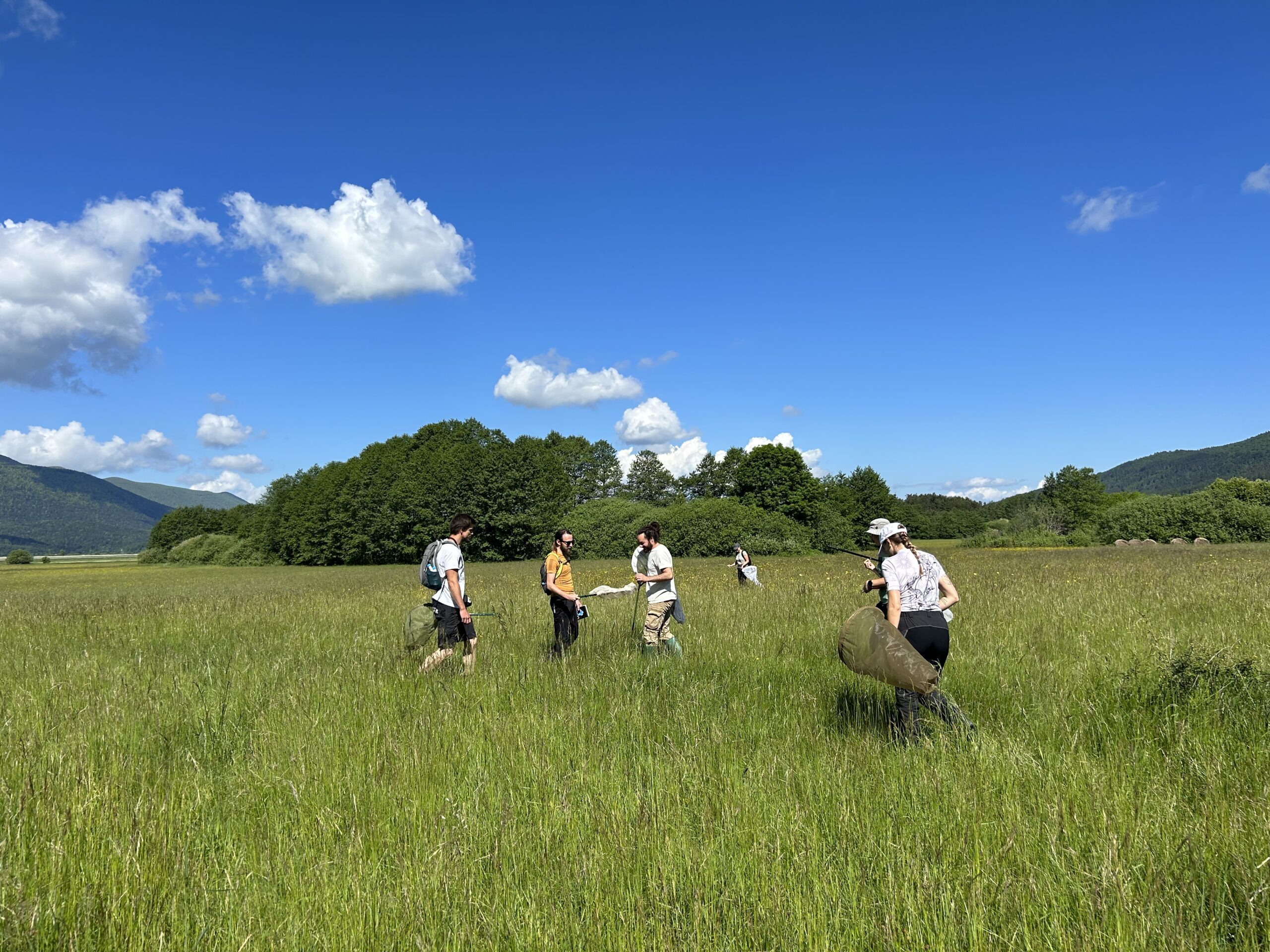
The study programme also includes content related to the management of final agricultural products and their processing into value-added goods. These topics are further complemented by social sciences (economics, entrepreneurship, and marketing), which provide students with the competencies needed to establish their own businesses and pursue self-employment, as well as the knowledge required to successfully access EU funding and subsidies. In addition to theoretical knowledge, strong emphasis is placed on experiential learning and practical training within companies, through which students become familiar with examples of good agronomic practices and gain valuable hands-on experience both in the field and in the laboratory.
Programme information
Name of the programme: Agronomy
Type of programme: professional higher education, 1st Bologna cycle
Degree awarded: “diplomirani inženir agronomije (VS)” equiv. to Bachelor of Applied Science
Duration: 3 years (6 semesters)
ECTS-credits 180
Mode of study: full-time
Language of study: Slovene
Place of study: Izola, Koper (partly)
Accreditation: The programme is accredited in accordance with the Higher Education Act and is officially recognized.
Admission to the first year of study shall be granted to applicants having:
a) successfully completed any four-year secondary-school programme; or
b) passed the vocational matura examination (poklicna matura) in any secondary school programme; or
c) passed the general matura examination (splošna matura).
In the case of enrolment limitations, applicants shall be selected based on their overall performance in
- the general matura
- vocational matura, or final examination (60% of points), and
- their grades in the 3rd and 4th years of secondary school (40% of points).
“Transfer between study programmes” refers to a situation in which a student enrolled in a particular study programme does not complete it (i.e. discontinues education in the enrolled programme) and directly enrols into a higher year of a new study programme, whereby both the previous and the new programme must belong to the same Bologna cycle (level). When considering the possibility of transferring to a new study programme, the comparability of the programmes and the student’s completed study requirements in the previous programme are taken into account.
A candidate may enrol in a higher year of the higher education professional study programme in Agronomy in accordance with the transfer criteria if they are transferring from a related first-cycle study programme or a related non-Bologna undergraduate study programme (programmes adopted before 11 June 2004), provided that the following conditions are met:
- the candidate fulfils the requirements for admission to professional higher education study programme Agronomy,
- the completion of the initial study programme which the candidate is transferring from ensures the acquisition of comparable competences to those of the professional higher education study programme Agronomy, and
- other criteria in accordance with the Criteria for Transfers between Study Programmes are met (comparable curriculum of the study programme, completed study requirements of the candidate).
Individual applications for transfer shall be considered by the Committee for Study and Student Affairs UP FAMNIT. Apart from comparability between both fields of study, the committee shall also consider the comparability between the study programmes, in accordance with the Criteria for Transferring between Study Programmes.
Enrolment on the basis of the Criteria for Transferring between Study Programmes is also open to candidates of a related study programme abroad who have been, in the process of recognition of their studies abroad, legally granted the right to continue their educational training in the study programme Agronomy.
In case of enrolment restrictions, applicants shall be selected on the basis of the average grade obtained during the study programme they are transferring from.
A student may progress to the next year if they accumulate at least 42 ECTS credits from the current year and complete all requirements from the previous year.
In special cases involving individual circumstances (such as illness or extraordinary situations), a student may be allowed to progress to the next year even with a lower number of ECTS credits. In such cases, the decision on enrollment is made by the Committee for Study and Student Affairs UP FAMNIT.
A student who has not completed all the requirements specified by the study programme for progression to the next year may, in accordance with the provisions of the Higher Education Act, repeat a year once during their studies, provided they have completed at least half of the ECTS credits required for advancement to the next year. If a student repeats a year, they are not entitled to extended student status (absolvent year), and their student status expires at the end of the 3rd year.
By progressing or repeating a year, a student retains student status and, consequently, the rights and benefits defined by law. In accordance with the law, a student may apply for an extension of student status, but for no more than one year.
Students choose two internally or externally elective courses in the 2nd and 3rd years.
Internal elective courses are selected by the student within the study programme. External elective courses may be chosen from accredited study programmes at related higher education institutions in Slovenia or abroad. Students may also select external elective courses from the list of internal elective courses.
More information on elective courses is available in the document “Curriculum” (see above).
In the 2nd and 3rd year, students complete compulsory practical training in a work environment (a total of 19 ECTS), as follows:
- in the 2nd year, the practical training lasts 4,5 weeks (180 hours) and is valued at 9 ECTS,
- in the 3rd year, the practical training lasts 5 weeks (200 hours) and is valued at 10 ECTS.
The purpose of the practical training is to consolidate theoretical knowledge in a real working environment, acquire specific professional competencies, face current practical situations, take an active approach to task performance, and establish contact with potential future employers. The training is carried out in various organisations such as cooperatives, agricultural and forestry chambers, companies, public institutions, associations, and others.
General competencies
- Knowledge of the professional terminology of the field.
- Sound knowledge of the global environmental problems.
- Knowledge and understanding of the agricultural development policy in Slovenia, the EU and beyond.
- Ability to identify the needs of the market.
- Ability to identify problems and to analytically solve them by using different sources and an interdisciplinary approach.
- Ability to transfer knowledge from theory into practice.
- Autonomous professional work in the field of biotechnical science.
- Developed communication skills with the ability to use modern communication technologies.
- Developed the ability to critically and self-critical assessment and the creation of independent texts (articles, papers, judgments, debates, etc.).
- Commitment to ethics and developed sense of professionalism.
- Ability to critically verify information and anticipate solutions and consequences.
- Ability to engage constructively with other professional profiles (teamwork).
Subject-specific competencies
- Ability to describe the state and trends of the agricultural production and the role of agriculture in the development of rural areas.
- Detailed knowledge of the complexity and vulnerability of the Mediterranean area.
- Ability to choose the adequate agricultural plant for production, according to the ecological conditions of the environment.
- Ability to plan and carry out plant production with basic and more demanding technologies.
- Ability to organize the procurement of planting material, agricultural machinery and equipment.
- Ability to manage the genetic material of crops and to implement the basic valorisation of the production and the agronomic properties of various agricultural plants.
- Basic knowledge of livestock breeding and fishery in the Mediterranean.
- Knowledge of the key parameters of agricultural products and food quality, quality schemes, storage and manipulation.
- Ability to identify the requirements of the market, determine and explain the basic indicators of the performance of agricultural production and explanations of the business decisions.
- Trade management of agricultural material.
- Ability to plan a Start-up business and to self-manage a family business with agricultural production.
- Ability to place new professional findings, information and interpretations into the context of basic agronomic and zoo-technical discipline.
- Use of modern information and communication technology in the field of expertise.
Graduates of the programme may continue their studies in master’s programmes of the second Bologna cycle or enter the labour market.
With the acquired knowledge, they are capable of working independently or collaboratively in various fields, including plant production and marketing in cooperatives, fruit and grapevine nurseries, seed companies, wineries, as well as fruit-growing, horticultural, and herbal centres, breeding centres, agricultural product and food quality monitoring organisations, chambers and agencies, and research institutions. In addition, they may work in companies involved in the design of horticultural facilities and permanent plantations, landscape architecture, institutions managing protected areas with ecological production, and botanical gardens.
Graduates may also work as self-employed entrepreneurs, involved in cultivation and consultancy activities, or in sustainable agrotourism.